Zetlandicus Island Gigantism
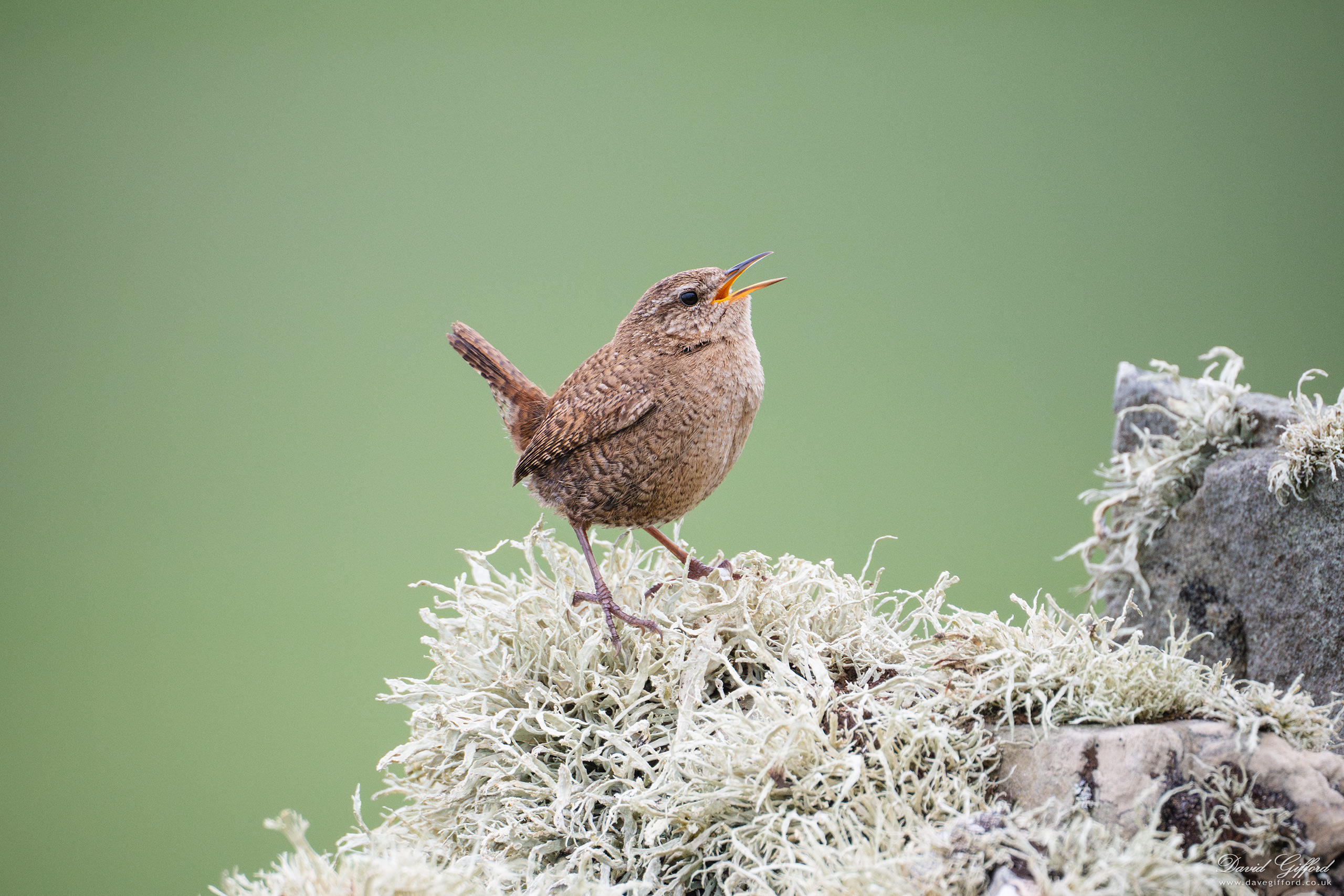
A Shetland Wren (Troglodytes troglodytes zetlandicus) singing loudly atop a lichen-covered stone dyke at Sumburgh Head.
The Shetland Wren is an endemic subspecies of the Eurasian wren, which is slightly larger and darker than the Wrens found on the British mainland. It also has a louder and more varied song - an adaptation thought to help males be heard above the waves on Shetland’s boulder beaches.
This distinctiveness has a genetic basis. A new study led by researchers from the University of Birmingham, published in 2026, has found that Shetland’s wrens are sufficiently divergent in genetics and song that they may be in the process of becoming a separate species (Michał T Jezierski, Jenny C Dunn, Carolina R F Chagas, William J Smith, ‘Parallel evolution of island syndromes coincides with limited parallel genetic differentiation in a passerine bird’, Evolutionary Journal of the Linnean Society, Volume 5, Issue 1, 2026, kzag008, https://doi.org/10.1093/evolinnean/kzag008).
The study also found that the Shetland subspecies is “within the 25% most extreme cases of avian island gigantism worldwide”. Island gigantism is an evolutionary phenomenon where animal species isolated on an island grow dramatically larger over generations compared to their mainland relatives. Interestingly however the study found that the Fair Isle wren, a separate subspecies from the Shetland Wren, “appears to show no evidence of island gigantism”.
There’s more about the Shetland Wren on the Shetland Endemics page of the Nature in Shetland website.
Posted:
Image #1631